
Bill C-224: Should Supplements Escape Vanessa's Law?
A Conservative private member's bill would take away Health Canada's power to recall natural health products, order label changes, and fine companies. The Health Committee deleted every clause in October. The fight now moves to the floor of the House.
The short version
- What it is: Bill C-224, An Act to amend the Food and Drugs Act (natural health products). Sponsor: Blaine Calkins, Conservative MP for Ponoka–Didsbury, Alberta.
- What it would do: take vitamins, herbal remedies, homeopathics, probiotics and other natural health products (NHPs) out of the "therapeutic products" safety regime they joined in 2023.
- Where it stands: second reading passed unanimously on 10 March 2026. On 7 October the Liberal majority on the Standing Committee on Health voted to delete every clause. Report stage is next. The bill's backers say it is set for 3 December, when Calkins can move to restore the deleted text.
How we got here: Vanessa's Law
In March 2000, fifteen-year-old Vanessa Young of Oakville collapsed and died of a heart arrhythmia. She had been taking the prescription stomach drug cisapride (Prepulsid), which was later pulled from the market. Her father, Terence Young, went on to become a Conservative MP and spent years campaigning for stronger drug-safety law. The result was the Protecting Canadians from Unsafe Drugs Act (Bill C-17), known as Vanessa's Law. It received Royal Assent on 6 November 2014 under the Harper government.
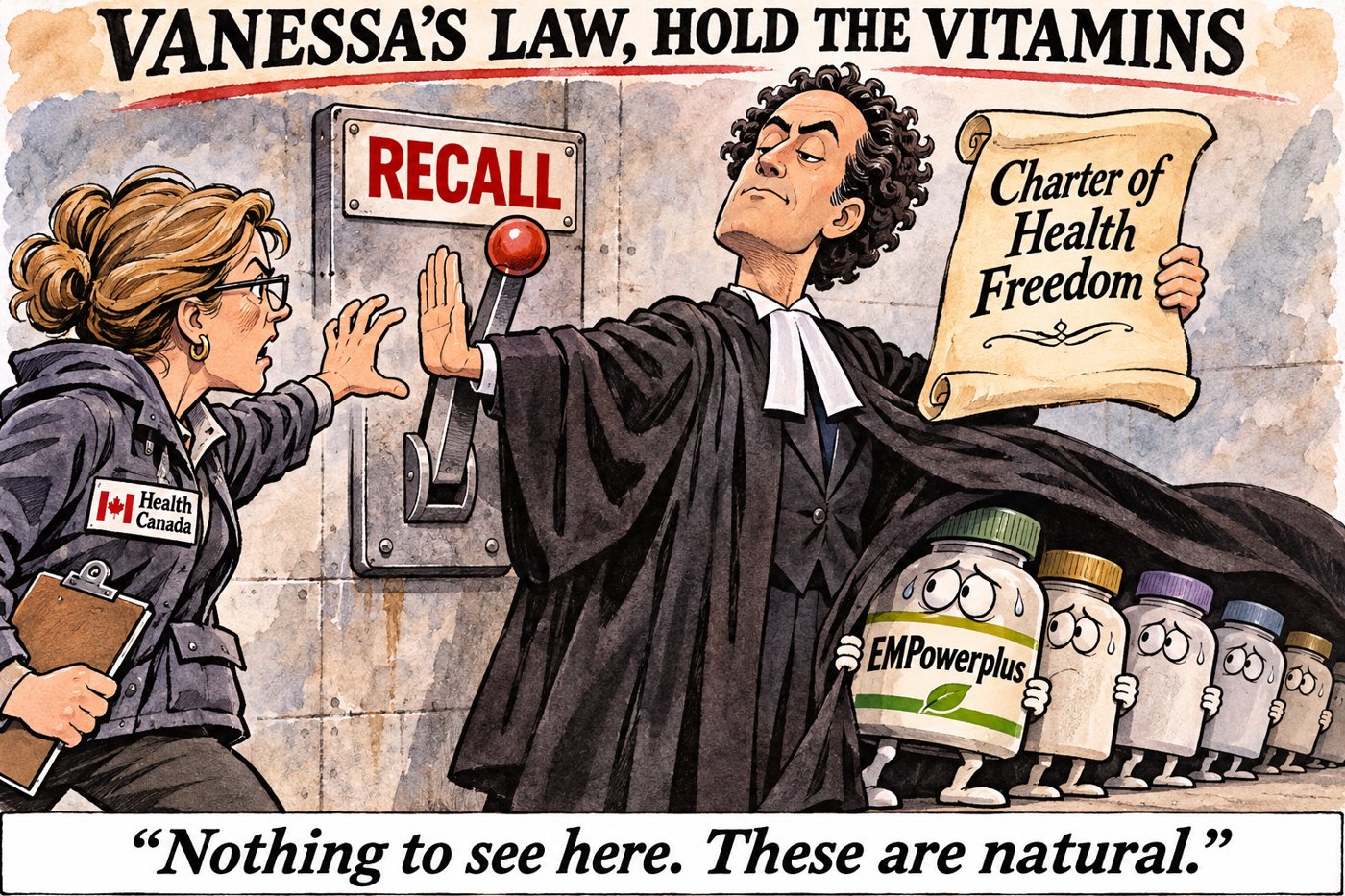
Vanessa's Law gave Health Canada powers it had not had before. It can order a recall, order a label change, compel a company to hand over safety information or run new studies, and require hospitals to report serious adverse reactions. Natural health products were deliberately left out. They stayed under the lighter Natural Health Products Regulations of 2004, and the industry's trade group, the Canadian Health Food Association, publicly congratulated Young when the law passed.
What changed in 2023
In April 2021 the Commissioner of the Environment and Sustainable Development, part of the Auditor General's office, tabled an audit of Health Canada's NHP program. Its findings were blunt:
- 88% of the sampled products were advertised with misleading information, including health claims Health Canada had never authorized.
- 56% carried misleading label information.
- Health Canada did not always verify that manufacturing sites followed good manufacturing practices before products went on sale.
- More than 91,000 NHPs had been licensed since 2004 without routine inspections.
Health Canada accepted the findings. It then extended Vanessa's Law to natural health products through the 2023 budget bill, Bill C-47 (Division 27 of Part 4), which received Royal Assent on 22 June 2023. Putting the change in an omnibus budget bill, rather than a stand-alone health bill, is the grievance at the root of everything that followed.
What Bill C-224 would actually do
- Redefine "therapeutic product" in the Food and Drugs Act so that it excludes natural health products. Nicotine replacement therapies stay in, through an amendment first proposed by the Bloc Québécois.
- Repeal sections 21.321 and 21.8(2) of the Act, two of the provisions that apply the 2023 oversight powers to NHPs.
- Add a transitional clause halting prosecutions for certain NHP offences committed between the 2023 changes and the bill coming into force.
In practical terms, Health Canada would lose its Vanessa's Law tools for supplements: mandatory recalls, ordered label changes, compelled safety information, and the stronger penalty regime. Licensing under the 2004 regulations would remain. NHPs would still need a product licence (an NPN) to be sold.
Timeline
| Date | Event |
|---|---|
| 6 Nov 2014 | Vanessa's Law (C-17) receives Royal Assent, with NHPs excluded. |
| 22 Apr 2021 | Environment Commissioner's audit tabled: 88% misleading advertising, 56% misleading labels. |
| 22 Jun 2023 | Budget bill C-47 receives Royal Assent, extending Vanessa's Law to NHPs. |
| 2024 | Calkins's first attempt, Bill C-368, passes second reading with NDP and Bloc support and clears the Health Committee. Then-Health Minister Mark Holland calls reversing the changes "cuckoo bananas." |
| 2025 | C-368 dies on the Order Paper when Parliament is prorogued and the election is called. |
| 18 Sep 2025 | Calkins reintroduces the bill as C-224. |
| 17 Nov 2025 | Second-reading debate opens. |
| 10 Mar 2026 | Second reading passes unanimously. The bill is referred to the Health Committee (HESA). |
| Jun–Oct 2026 | HESA hearings. Witnesses include the Canadian Health Food Association and Shawn Buckley of the Natural Health Products Protection Association (NHPPA). |
| 7 Oct 2026 | The committee's Liberal majority votes to delete every clause. |
| 21 Oct 2026 | The committee reports the gutted bill back to the House. |
| 3 Dec 2026* | Report stage, where motions to reinsert the deleted clauses can be moved. *Date as given by the NHPPA. Check LEGISinfo. |
The case on both sides
For the bill
- Process. A change this large was slipped into a budget bill without proper debate. Calkins called it "underhanded" and "sneaky." The NDP also objected to using an omnibus bill to do it.
- Small business. Conservatives say the new fees and red tape threaten a $5.5-billion industry made up largely of small firms, many of them owned by women.
- Low risk. Supporters argue NHPs are far safer than drugs. One brief to the committee noted that NHPs made up 0.6% of adverse-reaction reports in 2020.
- Proportionality. The Bloc has questioned whether pharmaceutical-style penalties and cost recovery fit a sector of small and medium-sized businesses.
- Choice. Calkins says more than 80% of Canadians rely on these products and that the rules threaten affordable access to vitamins, protein powders and probiotics.
Against the bill
- Lost powers. Health Canada would lose the ability to order a recall, force a label change, or fine a company over a dangerous or mislabelled supplement.
- The audit. The government's own auditor found misleading advertising on 88% of sampled products. Stripping enforcement tools after that finding is hard to defend.
- "Natural" isn't "harmless." Health Canada notes that NHPs are generally lower risk but not risk-free. Adulterated products, interactions with prescription drugs, and liver injury are real.
- Pharmacists' view. The Canadian Pharmacists Association backed the 2023 change, saying NHPs should have been covered in 2014.
- Amnesty. The bill would also halt prosecutions for offences already committed. That is a gift to whoever broke the law in the meantime.
QuackeryWatch's view
The process complaint is legitimate. A safety regime affecting tens of thousands of products deserved its own bill and its own hearings, not a few clauses buried in a budget. But a bad process is an argument for a proper review, not for tearing the protections out.
The "low risk" statistic proves less than it seems. NHPs produced few adverse-reaction reports in 2020 partly because nobody was required to report them. Hospitals had to report drug reactions, not supplement reactions. Mandatory reporting is how we find out how safe these products really are. Removing it guarantees we never know.
It is also worth remembering whose law this is. Vanessa's Law came from a Conservative MP who lost his daughter to a product that was presumed safe, and it was passed by a Conservative government. Extending it to supplements doesn't ban a single vitamin. It means that when a product is contaminated or dangerous, Health Canada can pull it off the shelf.
What they said on 4 November
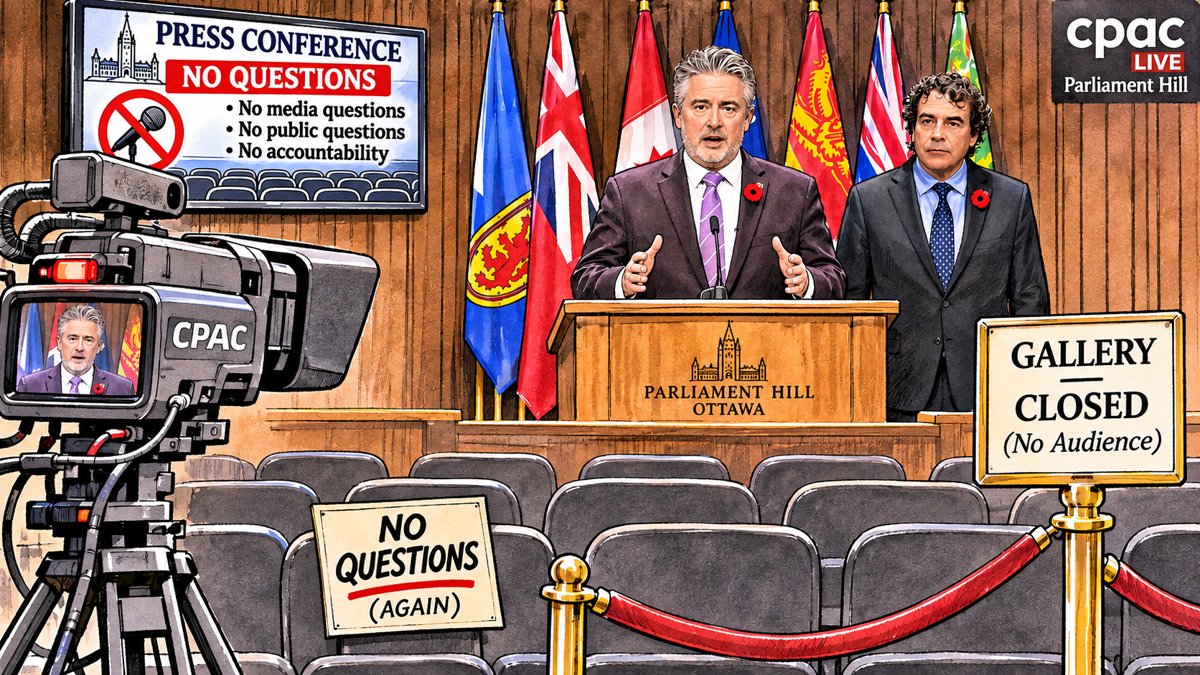
On Wednesday, 4 November 2026, Calkins and Shawn Buckley of the NHPPA held a 23-minute news conference on Parliament Hill, carried by CPAC. No reporters asked questions. Calkins said he has asked the Speaker to let him reinstate every deleted clause, and the bill's title, at report stage, which Buckley said begins on 3 December. Watch it on CPAC.
| What was said | The record |
|---|---|
| Calkins: under the 2023 changes, a small vitamin shop faces "the same kind of process that a company like Pfizer would have to go through." | Natural health products are still licensed under the 2004 Natural Health Products Regulations (an NPN), not the drug-approval process. The 2023 change added post-market powers: recalls, label changes and demands for safety information. |
| Calkins: there are "very few incidences" of harm, mostly from the wrong dose or not reading the label. | Before 2023, hospitals were not required to report supplement reactions, so harm was under-counted. The 2021 federal audit found misleading advertising on 88% of sampled products. |
| Buckley: Truehope was acquitted on necessity "or more people would have died." | He did not mention that he was Truehope's lawyer, that Truehope then lost its Charter challenge three times, up to the Supreme Court, or that Health Canada later reported serious adverse reactions in people with serious mental illness using EMPowerplus. See our profile. |
| Buckley: a woman's doctor treated her rheumatoid arthritis with methotrexate, "a chemotherapy drug"; a naturopath "cures her," and on methotrexate cancer was "not if … but when." | Low-dose weekly methotrexate is the standard first-line treatment for rheumatoid arthritis, at doses far below cancer chemotherapy. Rheumatoid arthritis has no cure, though remissions occur. Methotrexate carries a small added lymphoma risk, not a certainty of cancer. |
| Buckley: the U.S. deems supplements "by law to be safe," and 300 million Americans take them with "no health consequences." | U.S. law requires no pre-market approval and puts the burden on the FDA to show a product is unsafe; that is not a finding of safety. About 23,000 U.S. emergency visits a year are linked to supplements (New England Journal of Medicine, 2015). |
| Buckley: Health Canada is "paid for by the pharmaceutical industry," and drug-company fees "make up the majority of Health Canada's business." | Drug fees covered about 56% (about $176 million) of the cost of regulating drugs in 2022–23. The department as a whole is funded by Parliament, with budgets in the billions. |
| Buckley: he has "likely defended more companies charged by Health Canada than all other lawyers in Canada combined." | His own firm's website claims "likely … more than any other lawyer," based on an access-to-information request it has not published. |
Who is behind the campaign
The grassroots push for C-224 is led by the Natural Health Products Protection Association (NHPPA) and its president, lawyer Shawn Buckley (long based in Kamloops, BC, now in Alberta), who testified at the Health Committee. See our profile, Shawn Buckley: The Lawyer Behind the Supplement Lobby. Its current "Last Chance" campaign asks supporters to contact their MP once a day until 3 December. Buckley has written that the committee's decision "will cause death and suffering," and that because NHPs are legally classed as drugs they cannot be sold without a Health Canada licence. That licensing requirement dates from 2004. Bill C-224 would not change it.
Who are the businesses?
We went through Health Canada's licence data for Calkins' home province: 166 Alberta companies held natural health product licences from 2004 to 2017, most of them with five products or fewer, while only five Alberta companies still market a human drug. See Who Sells "Natural Health" in Alberta?
Calkins also sat on the panel at MP Dean Allison's September 2026 COVID vaccine-injury hearings on Parliament Hill. Calkins's own record, and his account of who drafted the bill, is on our page Blaine Calkins: The MP Carrying Bill C-224. We covered that event in The Allison Inquiry's American Guests, and the MP behind it in Dean Allison: The MP, the Inquiry, and Niagara’s Measles Gap.
Same song, two singers: Buckley and Calkins
The bill’s sponsor and the lawyer who says he drafted it make the same case, point for point.
| Topic | Shawn Buckley, NHPPA | Blaine Calkins, MP | The record |
|---|---|---|---|
| Who wrote the bill | “I wrote the first draft for MP Blaine Calkins.” (Commons committee, 2024) | “I had a bill drafted by the legislative drafters here. I asked Mr. Buckley if he would send me what he thought the bill should be.” (Health Committee) | Both agree the sponsor asked the lobby’s lawyer what the bill should say. |
| Products will vanish | About 60%, and possibly 70–75%, of natural health products would disappear under the 2004 rules. (2008 article, cited by the Fraser Institute in 2009) | “70 per cent of brands have indicated they will need to withdraw products from the market.” (2023) | More than 91,000 products were licensed after 2004 (2021 federal audit). |
| Safety | “There has never been a documented death caused by a natural health product.” (Calgary Herald, 2010) | Natural health products pose “minimal risk” (2023); “very few incidences” of harm (2026). | Before 2023, hospitals did not have to report supplement reactions. The 2021 audit found misleading advertising on 88% of sampled products. |
| Health Canada | Health Canada is “paid for by the pharmaceutical industry.” (4 Nov 2026) | A small vitamin shop faces “the same kind of process that a company like Pfizer would have to go through.” (4 Nov 2026) | Drug fees cover part of the cost of regulating drugs; Parliament funds the department. Supplements are still licensed under the lighter 2004 rules. |
| Who they speak for | President of the Natural Health Products Protection Association; long-time lawyer for Truehope. | Asked if he is the industry’s spokesperson: “No, it wouldn’t be accurate at all.” | The Canadian Health Food Association called his bill’s progress a “victory” and commended his leadership (2024). |
Sources for each quotation are on our Calkins, Buckley and Bill C-224 pages.
This isn’t the first time
Bill C-224 is the latest round of a fight that has run in Parliament for more than 20 years. The bills change, but the arguments, and many of the players, stay the same.
| Date | What happened |
|---|---|
| 1990–1998 | The Canadian Health Food Association (CHFA) says it led a 1990 public campaign for new rules on natural health products. That campaign produced the Health Committee’s 1998 report, Natural Health Products: A New Vision, with 53 recommendations. Those recommendations became the 2004 Natural Health Products Regulations. |
| Feb 2002 | The Fraser Institute publishes Cynthia Ramsay’s A Cure Worse than the Illness, which argues that the proposed regulations were not needed. Its case is the one C-224’s backers make now: the products are low-risk, and the paper sets U.S. deaths from homeopathic and dietary supplements beside deaths from Aspirin. |
| Mar 2003 | James Lunney, a chiropractor and Canadian Alliance MP for Nanaimo–Alberni, BC, introduces Bill C-420. It would have reclassified natural health products as foods and lifted limits on the health claims sellers could make. The bill died when the 2004 election was called. |
| Oct 2004 | Colin Carrie, Conservative MP for Oshawa and also a chiropractor, reintroduces it, again as Bill C-420. |
| 2005 | Carolyn Dean, MD, publishes Death by Modern Medicine “with Trueman Tuck.” The book tells Canadian readers to send form letters to their MPs backing C-420. It also asks them to join Friends of Freedom, Tuck’s consumer group, and the Alliance of Natural Health Suppliers, a group for supplement makers and retailers. |
| 3 May 2005 | The Health Committee hears from the industry. CHFA president Valerie Bell testifies that the CHFA does not support defining natural health products as food. She asks instead that their existing definition be written into the Food and Drugs Act, and that Schedule A and section 3, which bar disease claims, be repealed. GNC Canada and Purity Life also testify. |
| 23 Nov 2005 | The Health Committee reports to the House that it recommends the House not proceed further with C-420. The bill dies. |
| Sept 2009 | The Fraser Institute publishes Ramsay’s follow-up, Unnatural Regulation. It recommends abolishing the Natural Health Products Directorate, leaving supplement safety to “nongovernmental organizations,” and replacing all health licences, physicians’ included, with certification. Its warning that 60% to 75% of natural health products would disappear from the market comes from a 2008 magazine article by Shawn Buckley, now the lead lobbyist for C-224. The prediction was wrong. The 2021 federal audit counted more than 91,000 products licensed since 2004, against a market Health Canada had estimated at 40,000 to 50,000 products in 2004. |
| June 2011 | Trueman Tuck’s consulting firm writes to Health Canada’s Natural Health Products Directorate for CobraMed Pharmaceuticals, defending Cobroxin, a homeopathic cobra-venom pain spray. Its letter says the directorate was not questioning the ingredient’s safety. It was questioning whether the product was really homeopathic, and whether it worked. |
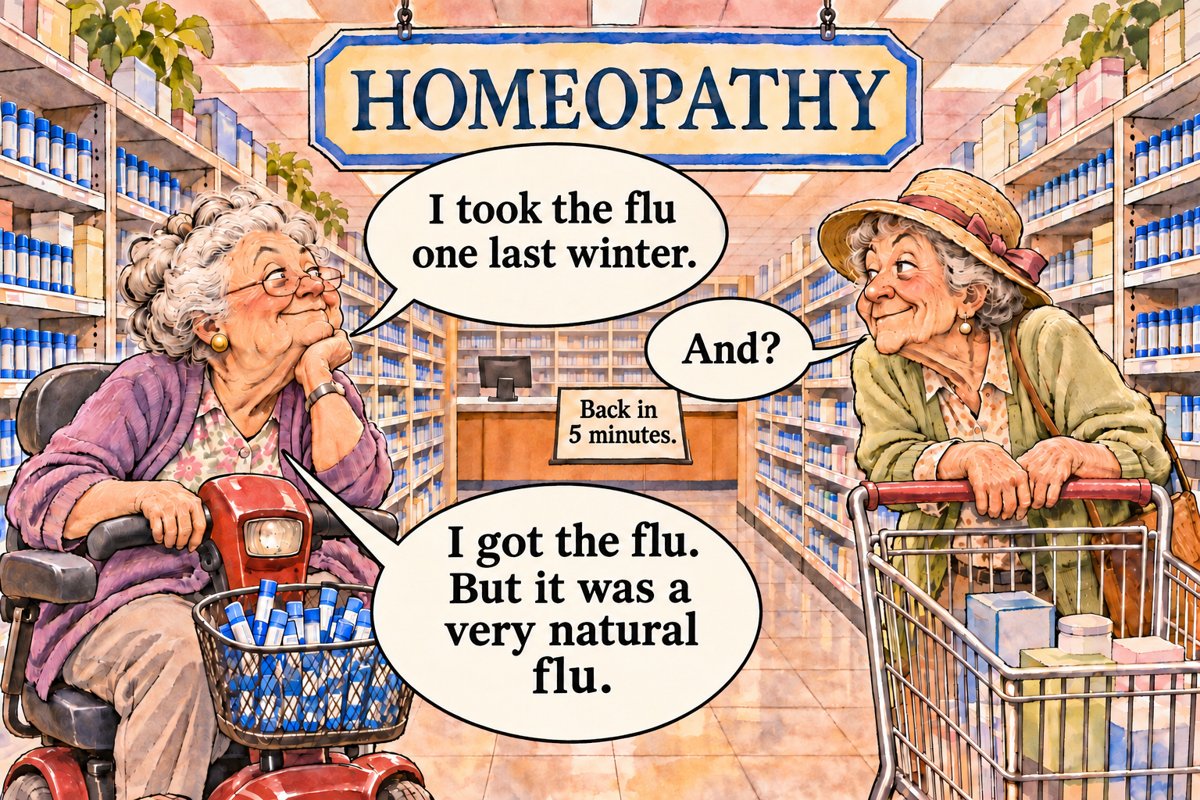
| May 2013 | André Picard reports in the Globe and Mail that Health Canada licensed homeopathic “vaccines” (nosodes) for influenza, polio, measles and whooping cough. Health Canada approved them because they were safe, not because they work. |
| Oct 2013 | That autumn a Waterloo, Ontario naturopath advertises a “homeopathic immune boosting shot” at a flu-season talk in a local GoodLife Fitness club. |
| Dec 2019 | Paul Benedetti, Wayne MacPhail and Timothy Caulfield answer former NDP leader Thomas Mulcair’s “freedom of choice” defence of homeopathy in the Globe and Mail. Their point: sick people are not ordinary shoppers, and choice is not informed without accurate information. |
| 2023–2026 | Budget bill C-47 extends Vanessa’s Law to natural health products. Calkins answers with C-368, then C-224 (see the timeline above). |
What stayed the same
- The arguments. “Freedom of choice,” “drugs are what kill people,” and “small producers against the drug industry” were all made for C-420 in 2003–2005. They are made for C-224 today.
- The sponsors’ background. Both MPs who carried C-420 were chiropractors.
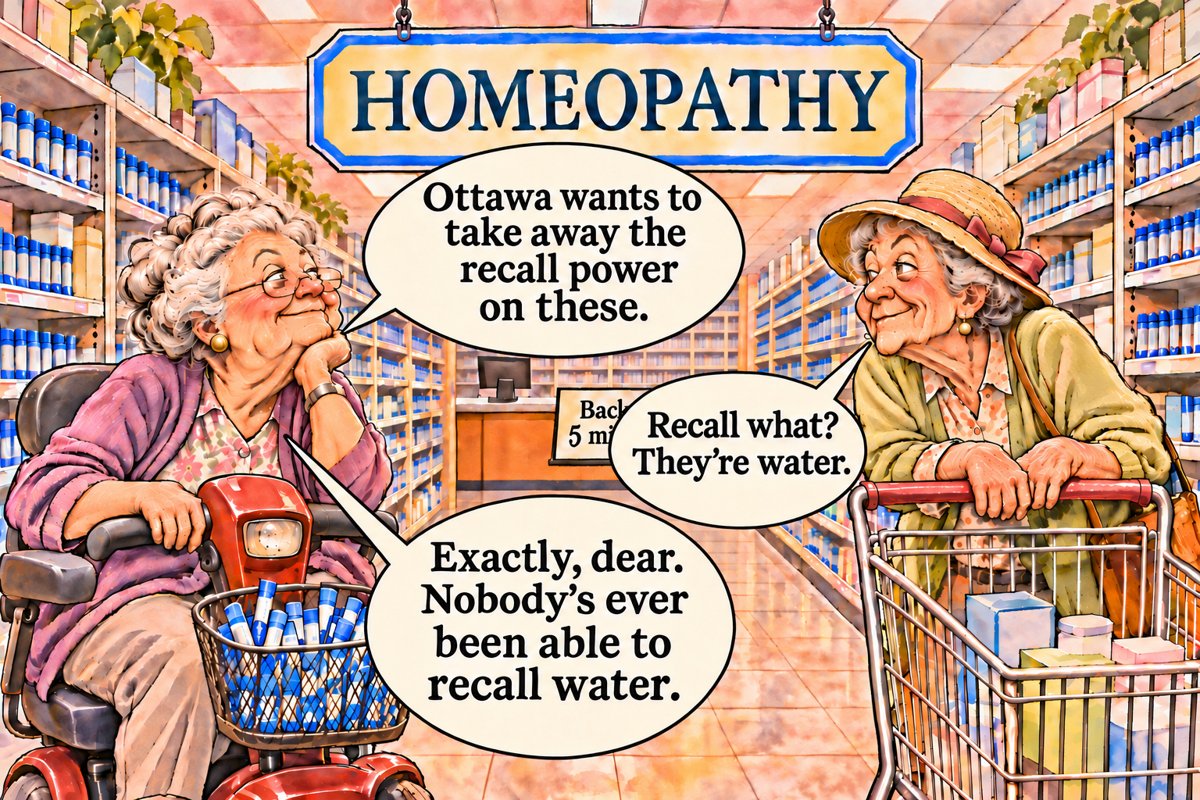
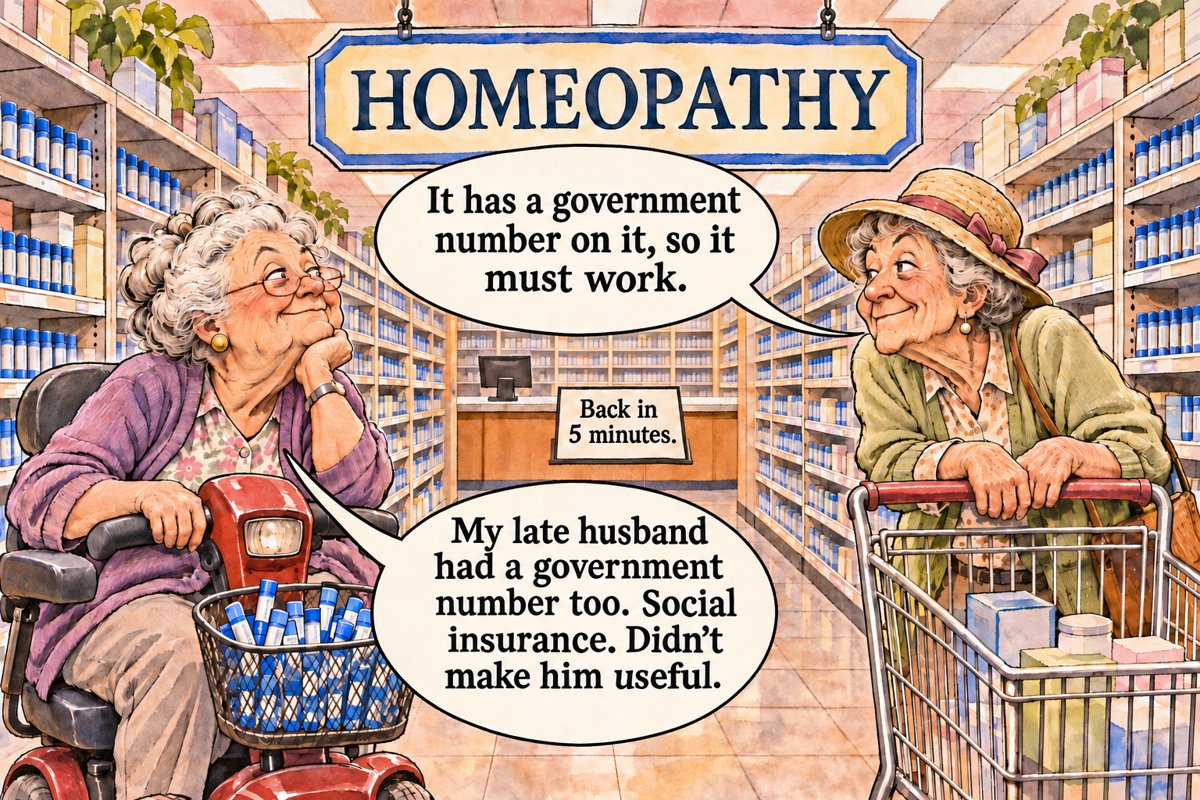
- Homeopathy rides along. Homeopathic remedies are legally natural health products. Every one of these bills would have covered them, even though, as the nosode licences showed, a Health Canada number on a homeopathic product is a safety finding, not proof it works.
- The textbook. The standard naturopathy text, Pizzorno and Murray’s Textbook of Natural Medicine (4th ed., 2013), lists its editors’ industry roles. Joseph Pizzorno chairs the science board of Bioclinical Naturals in Burnaby, BC. Michael Murray is director of product development at Natural Factors, a supplement maker based in BC. The book teaches homeopathy in its own chapter.
What changed
In 2005 the industry’s own trade association told MPs that taking natural health products out of the drug framework would undo what had been built, and asked Parliament to strengthen the regulations. Bill C-224 does not reclassify supplements as food. It strips out the newer safety powers: recalls, ordered label changes, and compelled safety information. By 2023 the same association was running a “Save Our Supplements” campaign against extending Vanessa’s Law to natural health products. It testified on C-224 as well.
What you can do
- Tell your MP what you think before report stage. The bill's supporters are writing every day. Find your MP at ourcommons.ca/members.
- Follow the bill on LEGISinfo, Parliament's official tracker.
- See who holds the licences: our Alberta licence-holder analysis, with charts and a downloadable spreadsheet.
- Know the sponsor: Blaine Calkins: The MP Carrying Bill C-224.
- See what’s on the drugstore shelf: The Homeopathy Aisle: Why Your Pharmacy Sells Water.
- Check any product you buy: see our guide, What an NPN on the label does and doesn't mean.
- Report a bad reaction to a supplement through Health Canada's MedEffect Canada page.
Sources
- Parliament of Canada, LEGISinfo: C-224 (45-1), status and committee meetings.
- openparliament.ca, Bill C-224, debate record (second reading, 17 Nov 2025).
- Build Canada, C-224 bill analysis (sections repealed, transitional clause).
- Conservative Party of Canada, Calkins statement on committee defeat.
- The Albertan, "Ponoka-Didsbury MP's natural health products bill defeated".
- NHPPA, "Last Chance to Save Bill C-224", and Shawn Buckley, Vitality Magazine column.
- Commissioner of the Environment and Sustainable Development, Report 2, Natural Health Products, Health Canada (2021).
- Health Canada, Extending Vanessa's Law to natural health products.
- Health Canada, Vanessa's Law (Bill C-17), 2014.
- Senate SOCI Committee, CHFA testimony on C-47 (2023).
- Canadian Press via Powell River Peak, "Conservatives are trying to loosen regulations on natural health products" (C-368, Holland quote).
- openparliament.ca, Bill C-368 (44-1).
- HESA brief, April 2026 (0.6% adverse-reaction statistic).
- CPAC, Conservative MP Blaine Calkins Discusses Bill C-224 on Natural Health Products (4 Nov 2026); quotations checked against a QuackeryWatch transcript of the recording.
- Geller AI et al., Emergency department visits for adverse events related to dietary supplements, NEJM 2015; Canadian Centre for Policy Alternatives, drug-regulation cost recovery; Health Canada, EMPowerplus adverse reactions (2007); Buckley & Company, Food and Drugs Act charges.
- House of Commons Standing Committee on Health, Evidence, Meeting 36 (3 May 2005), Bill C-420: testimony of the Canadian Health Food Association, GNC Canada and Purity Life.
- Standing Committee on Health, Minutes, Meeting 43 (17 May 2005), and Bonnie Brown, 17th Report presented to the House, 23 Nov 2005 (recommendation not to proceed with C-420).
- openparliament.ca: James Lunney on C-420 (7 Feb 2005); Colin Carrie, reintroduction of C-420 (Nov 2004).
- Cynthia Ramsay, A Cure Worse than the Illness: Canada’s Proposed Regulatory Framework for Natural Health Products in Light of International Evidence, Fraser Institute Public Policy Sources No. 55, February 2002.
- Carolyn Dean with Trueman Tuck, Death by Modern Medicine (Matrix Verité, 2005); introduction, “Advocacy”.
- Tuck’s Professional Services, letter to the Natural Health Products Directorate re Cobroxin Oral Spray (CobraMed Pharmaceuticals), 20 June 2011. Copy in QuackeryWatch files.
- André Picard, “Why is Health Canada approving useless homeopathic ‘vaccines’?”, Globe and Mail, 13 May 2013.
- Paul Benedetti, Wayne MacPhail and Timothy Caulfield, “Alternative facts: Choosing homeopathic treatments isn’t really a free choice,” Globe and Mail, December 2019.
- Cynthia Ramsay, Unnatural Regulation: Complementary and Alternative Medicine Policy in Canada, Fraser Institute, Studies in Health Care Policy, September 2009 (executive summary and pp. 29–30, citing Shawn Buckley, “Disappearing Natural Health Products a Life and Death Issue,” Health Action Magazine, Summer 2008).
- paNOW / Canadian Press, “Sask. business owner among those opposed to potential changes for natural health products”, 4 July 2023 (CHFA “Save Our Supplements” campaign).
- Joseph E. Pizzorno and Michael T. Murray, eds., Textbook of Natural Medicine, 4th ed. (Churchill Livingstone/Elsevier, 2013), ISBN 978-1-4377-2333-5; editors’ affiliations, title page; Ch. 39, “Homeopathy,” p. 314.