The Homeopathy Aisle: Why Your Pharmacy Sells Water
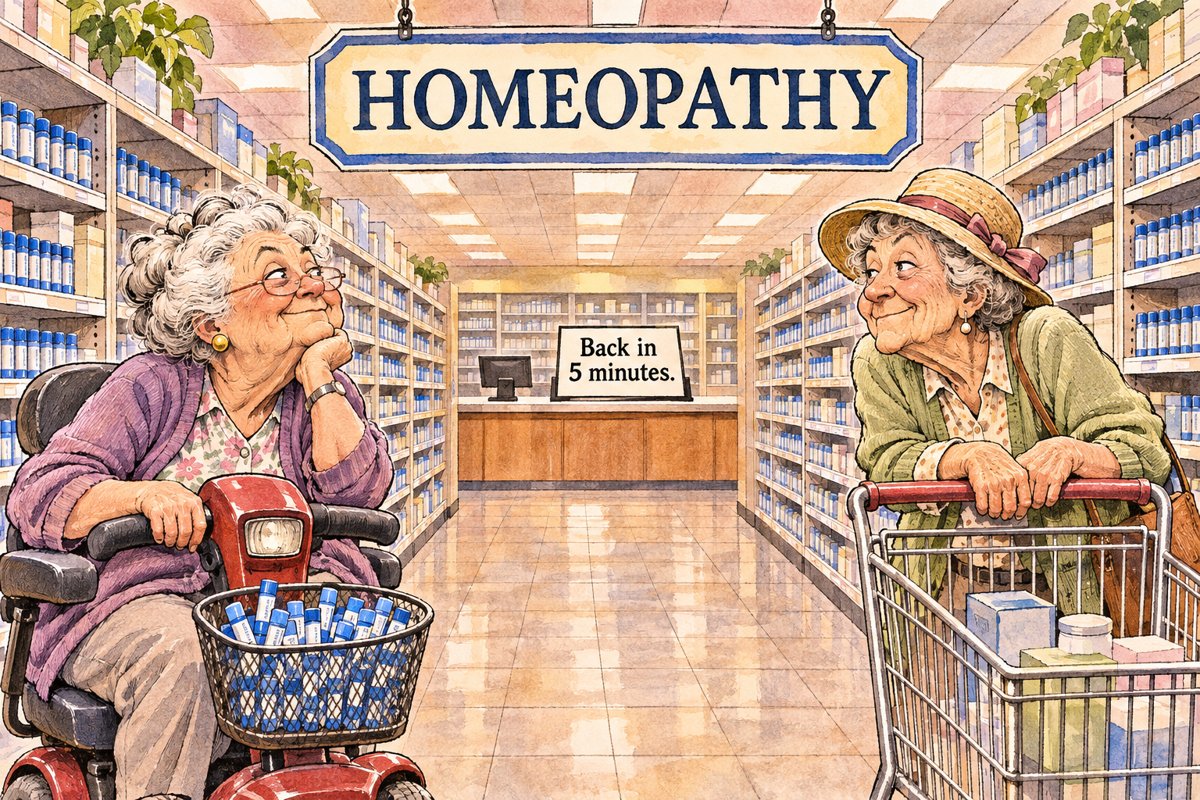
Canada’s big drugstore chains give metres of shelf space to homeopathic remedies, a few steps from the pharmacist’s counter. Ask the pharmacist whether they work and you may not get a straight answer.
The short version
- What it is: homeopathic remedies are diluted so many times that most contain no molecule of the substance on the label.
- Does it work? Australia’s national medical research council reviewed the evidence in 2015 and found no health condition for which there is reliable evidence that homeopathy works.
- Why the Health Canada number? A DIN-HM or NPN means Health Canada judged the product safe to sell. It is not proof that it works.
- Why it matters now: homeopathics are legally natural health products. Bill C-224 would remove Health Canada’s power to recall them or order label changes.
What is in the box
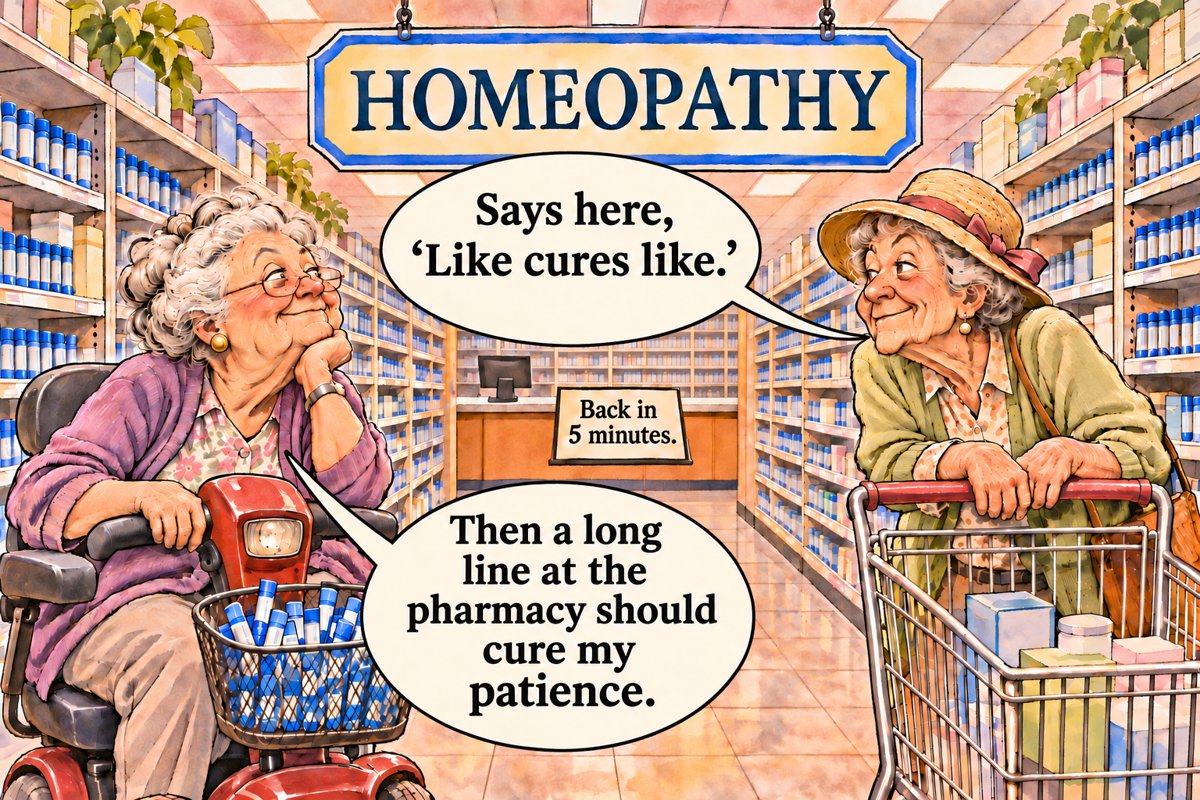
Homeopathy was invented by the German physician Samuel Hahnemann around 1800. It rests on two ideas. The first is “like cures like”: a substance that causes symptoms in a healthy person is supposed to cure the same symptoms in a sick one. The second is that diluting the substance, and shaking it at each step, makes it stronger.
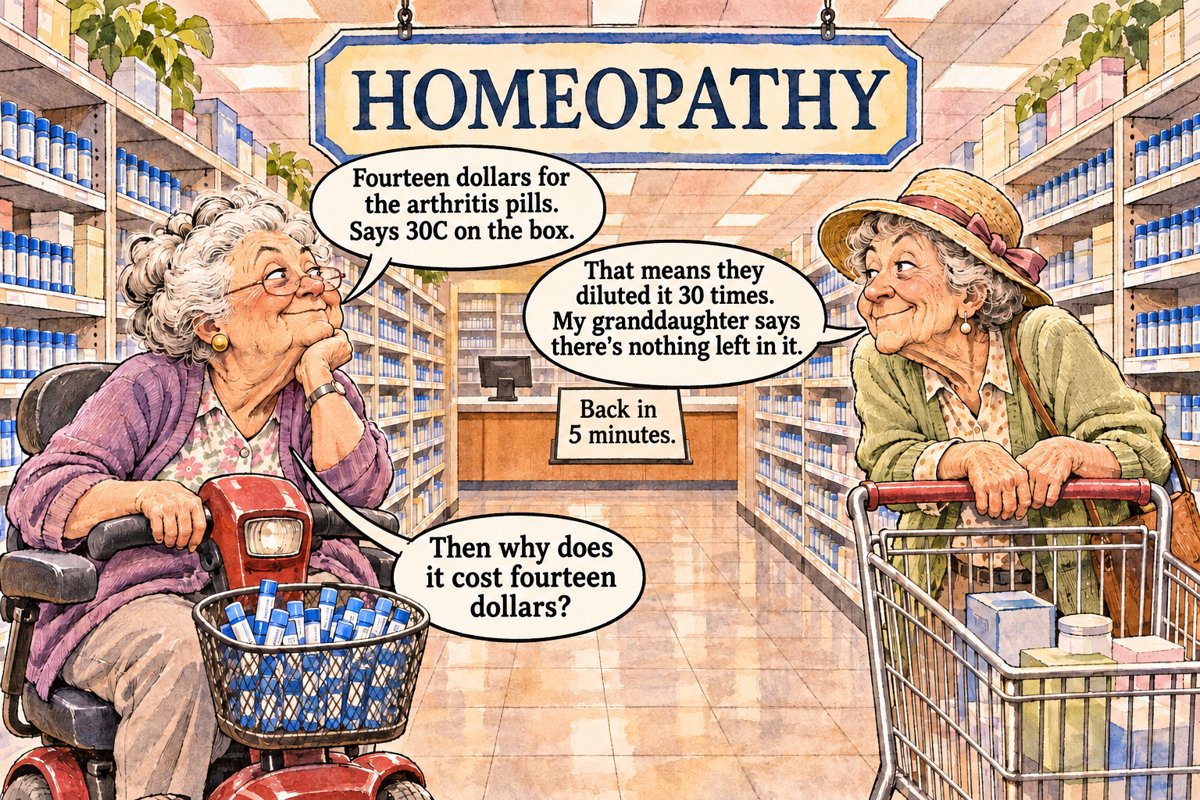
The dilution is written on the label. “C” means one part in 100. A 30C remedy has been diluted one part in 100, then again, thirty times in a row: one part in 1060. Past about 12C, the odds are against a single molecule of the starting substance remaining. A 30C pill is a sugar pill that once met some water that once met the ingredient.
One best-seller: Oscillococcinum
Boiron’s Oscillococcinum is a fixture of the winter shelf. Its active ingredient is an extract of the heart and liver of a Muscovy duck, diluted to 200C: one part in 100, two hundred times over. In 2014 Boiron Canada’s website told parents it was “well adapted for the whole family,” from infants one month old to seniors, and said it shortens flu symptoms.
The Cochrane Collaboration’s 2015 review found no significant effect in preventing flu-like illness, and not enough good evidence to draw firm conclusions about treatment.
Does any of it work?
In 2015 Australia’s National Health and Medical Research Council (NHMRC) assessed the evidence from 225 controlled studies. It concluded that there are no health conditions for which there is reliable evidence that homeopathy is effective, and warned that people who choose homeopathy may put their health at risk if they reject or delay proven treatment. Homeopathy groups dispute how strictly the council defined “reliable” evidence.
Defenders fall back on choice. In December 2019, former NDP leader Thomas Mulcair defended homeopathy on those grounds. Journalists Paul Benedetti and Wayne MacPhail and health-law professor Timothy Caulfield answered him in the Globe and Mail. Sick people, they argued, are not ordinary shoppers, and a choice is not informed when the information behind it is wrong.
Why it carries a Health Canada number
Since 2004, homeopathic remedies have been regulated as natural health products. Each one sold in Canada needs a product number, usually a DIN-HM (Drug Identification Number – Homeopathic Medicine). To most shoppers a government number looks like a seal of approval. It is not. Health Canada accepts traditional homeopathic references as support, and judges mainly whether the product is safe. Water usually is.
The result showed up in 2013, when the Globe and Mail’s André Picard reported that Health Canada had licensed homeopathic “vaccines” (nosodes) for influenza, polio, measles and whooping cough. That autumn a Waterloo, Ontario naturopath was advertising a “homeopathic immune boosting shot” at a local gym. In July 2015, after a CBC Marketplace investigation and pressure from public-health officials, Health Canada ordered nosode labels to state that the product “is neither a vaccine nor an alternative to vaccination.” It also stopped approving cough, cold and flu claims on homeopathic products for children 12 and under unless the claims had scientific evidence. By then it had authorized 121 nosode products and 139 homeopathic cough, cold and flu products for children.
See also: What an NPN on the label does and doesn’t mean.
Ask the pharmacist
Pharmacists are held out as the experts on these products. A 2008 review of Canadian pharmacy rules found that most provinces expect pharmacists to be knowledgeable about natural health products and, when asked, to give accurate information on their efficacy, side effects and interactions. The national pharmacy regulators’ 2010 position statement sets a lower bar for the shelf itself. A pharmacist should not sell a product without a DIN, NPN or DIN-HM. A homeopathic remedy with a DIN-HM clears that bar.
Even homeopaths are held to more than a shelf is. The College of Homeopaths of Ontario requires its registrants to explain their assessment, and to get informed consent, before starting treatment. Its standard adds that a homeopathic assessment is not a medical diagnosis. A customer picking a tube off a drugstore shelf gets none of that.
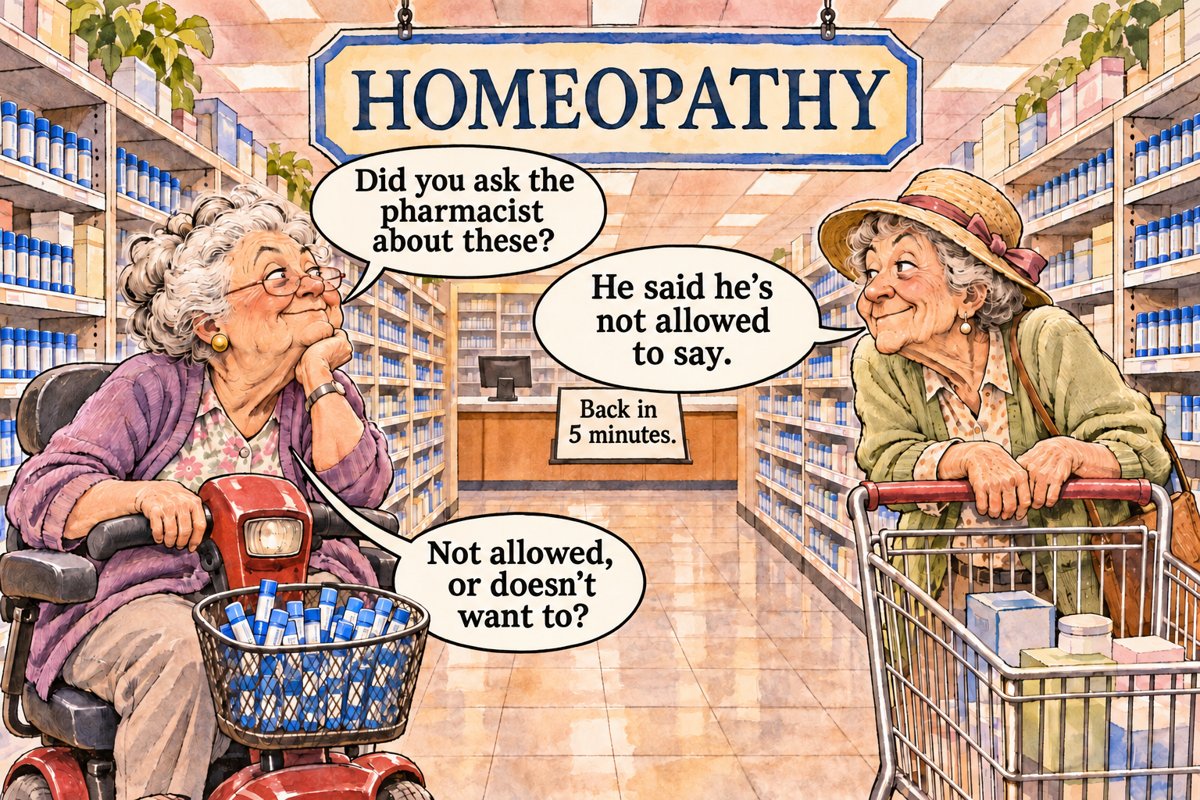
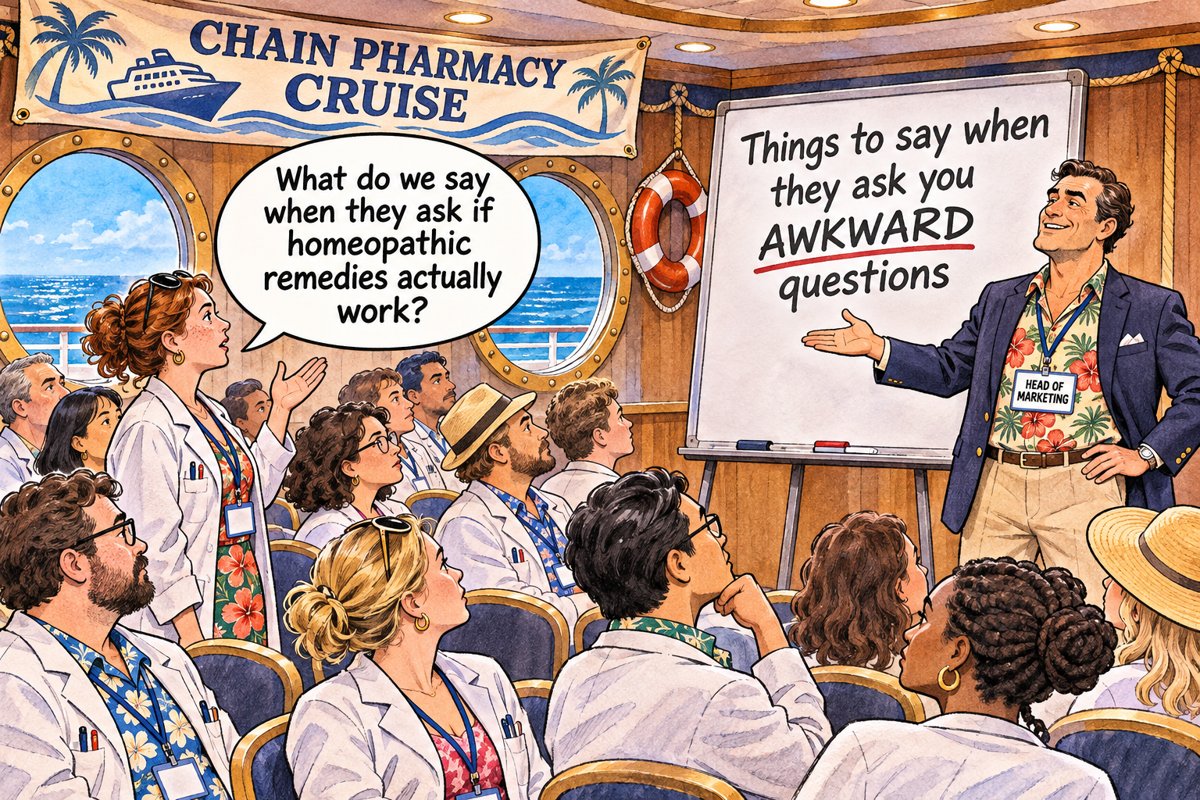
Over the years, pharmacy managers and staff have told me they were instructed not to answer customers’ questions about these products. That is the question we have now put to the chains’ head offices (below).
Pharmacies have drawn this line before
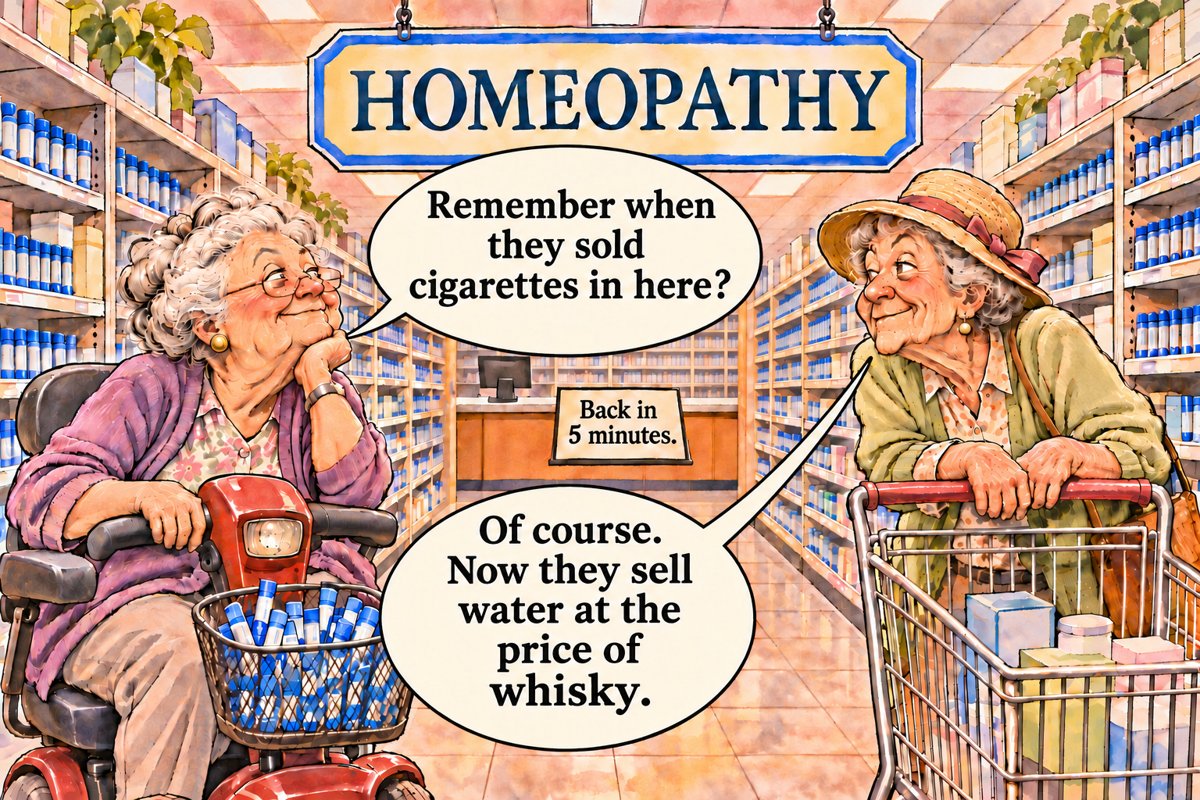
Ontario pharmacies used to sell cigarettes, and Shoppers Drug Mart was once owned by Imasco, the parent company of Imperial Tobacco. The Ontario College of Pharmacists began calling for a ban in 1991. The Ontario Pharmacists’ Association told MPPs in 1994 that a pharmacist’s role as a health professional takes precedence over the role of retailer. Ontario’s Tobacco Control Act banned tobacco sales in pharmacies, and stores containing a pharmacy, from 31 December 1994, the first province to do so. Other provinces followed.
The chains survived. The same argument applies to products that do nothing: a pharmacy’s shelves carry the authority of the pharmacist behind the counter.
What we are asking the chains
We are writing to the head offices of the companies that run Canada’s largest pharmacy chains. We will update this table as the letters go out, and publish the answers here. We are asking each company:
- When did it start selling homeopathic products, and why?
- How are complaints from customers and physicians about these products handled? Do they reach senior management, the board, or an ombudsperson?
- Have its pharmacists been given instructions on how to answer questions about homeopathic products?
| Company | Pharmacy banners | Status |
|---|---|---|
| Loblaw Companies | Shoppers Drug Mart, Pharmaprix, Loblaw pharmacies | Letter to be sent |
| Empire Company | Sobeys and related grocery pharmacies | Letter to be sent |
| Rexall | Rexall | Letter to be sent |
| Metro Inc. | Jean Coutu, Brunet, Metro pharmacies | Letter to be sent |
| London Drugs | London Drugs | Letter to be sent |
| Walmart Canada | Walmart pharmacies | Letter to be sent |
| Costco Wholesale Canada | Costco pharmacies | Letter to be sent |
What you can do
- Ask the pharmacist whether a homeopathic product has been shown to work better than a placebo. Note the answer, and the store.
- Read the label. Look for the dilution (“30C,” “200C”) and for the nosode warning if the product claims to prevent infection.
- Never use a homeopathic product in place of a vaccine or of treatment for a serious or worsening illness, especially in a child.
- Report a bad experience, including advice to skip proven treatment, to the provincial pharmacy regulator. In Ontario that is the Ontario College of Pharmacists. Report product problems to Health Canada through MedEffect Canada.
- Follow Bill C-224, which would remove Health Canada’s recall and label-change powers over these products.
Sources
- National Health and Medical Research Council (Australia), NHMRC Statement on Homeopathy and Information Paper: Evidence on the effectiveness of homeopathy for treating health conditions, March 2015; reported by CBC News, 11 March 2015.
- Mathie RT, Frye J, Fisher P, “Homeopathic Oscillococcinum for preventing and treating influenza and influenza-like illness”, Cochrane Database of Systematic Reviews 2015, CD001957.
- Boiron Canada, “Flu,” boiron.ca learning centre (page captured 1 April 2014). Copy in QuackeryWatch files.
- Paul Benedetti, Wayne MacPhail and Timothy Caulfield, “Alternative facts: Choosing homeopathic treatments isn’t really a free choice,” Globe and Mail, December 2019.
- André Picard, “Why is Health Canada approving useless homeopathic ‘vaccines’?”, Globe and Mail, 13 May 2013.
- Health Canada, Statement from the Minister of Health on labelling changes for certain homeopathic products, 31 July 2015; CBC News, 31 July 2015 (121 nosode and 139 children’s products authorized).
- Facebook page of a Waterloo naturopathic doctor, posts of October 2013 (captured). Copy in QuackeryWatch files.
- Farrell J, Ries NM, Boon H, “Pharmacists and Natural Health Products: A systematic analysis of professional responsibilities in Canada”, Pharmacy Practice 2008;6(1):33–42.
- National Association of Pharmacy Regulatory Authorities, position statement on the sale of non-approved marketed health products (January 2010), as reported in Naturopathic Doctor News & Review, February 2010.
- Ontario Legislature, Standing Committee on Social Development, Bill 119, Tobacco Control Act: Ontario Pharmacists’ Association, 24 Feb 1994; CMAJ 1996;154(2):230; Tobacco Control Act, 1994, S.O. 1994, c. 10.
- College of Homeopaths of Ontario, Standard 2, “Communicating a Homeopathic Assessment” (approved 3 Feb 2014).